تأثٍر اليورانيوم المنضب على البيئة العراقية (معالجة قانونية)
تاريخ النشرمدة القراءةدقيقة واحدة
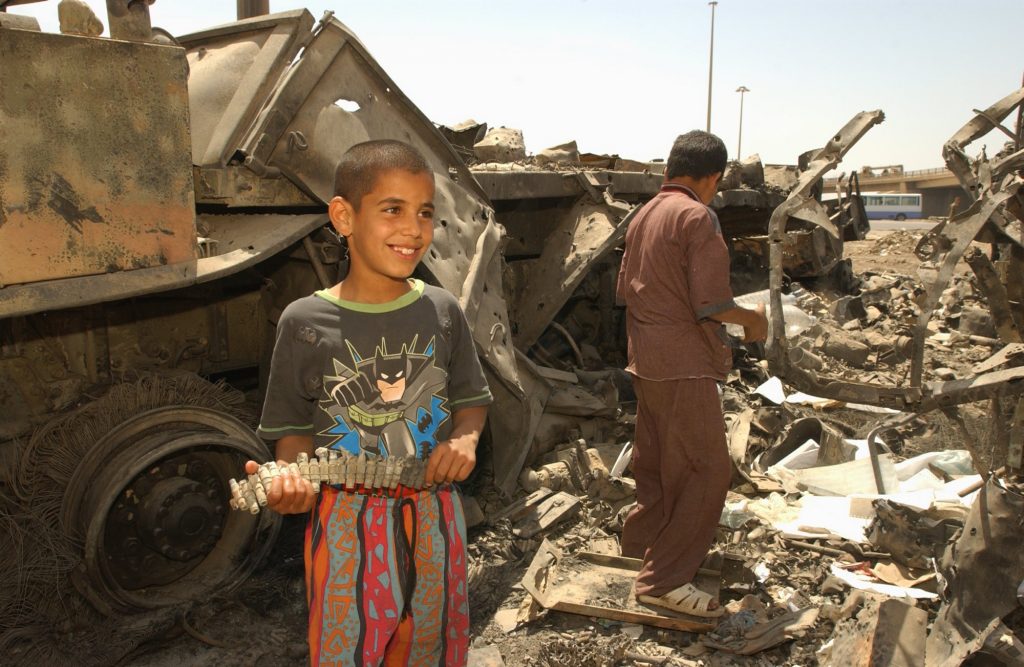
BAGHDAD, IRAQ – MAY 3: Searching for play toys, two Iraqi boys ignore warning signs written by American troops to keep Iraqis away from a series of burnt U.S. ammunition trucks contaminated by U.S. Depleted Uranium (DU) bullets May 3, 2003 in Baghdad, Iraq. Although some bulldozed topsoil points to a U.S. clean-up effort, piles of DU ash and even an exposed, three-foot-long DU penetrator still contaminate the site. DU bullets have been controversial since they were first used in the 1991 Gulf War, though until this war it had never before been used in heavily populated urban areas. DU leaves behind a toxic and radioactive residue that experts say can be dangerous–in the US, by law, it must be disposed of in low-level radioactive waste dumps, and licences from the Nuclear Regulatory Commission regulate its handling. Some U.S. veterans blame DU for Gulf War syndrome; Iraqis have for years alleged that 1991 DU use contributed to a spate of birth defects and cancers in southern Iraq. (Photo by Scott Peterson/Getty Images)